What is scapular winging, and how do we treat it?
Body Mechanics

What is scapular winging?
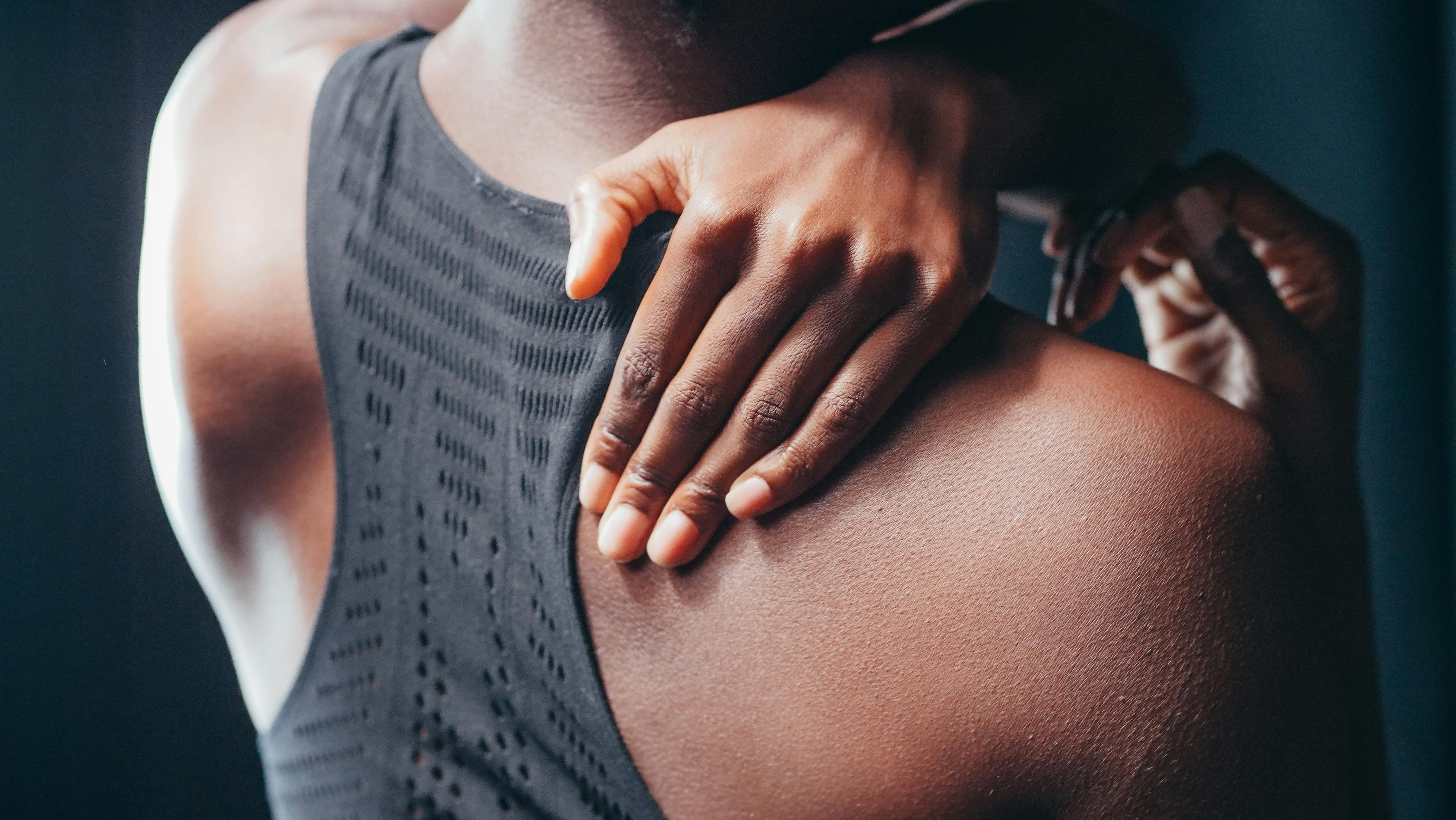
Scapular winging occurs when the medial (inner edge) and inferior (bottom corner) aspects of the scapula (shoulder blade) lift away from the rib cage. This often becomes visible during scapular depression and retraction (pulling the shoulder blade down and towards the spine), but in many cases can also be seen at rest.
Why does it happen?
This pattern is typically the result of reciprocal inhibition, a neuromuscular process in which the contraction or chronic tightness of one muscle inhibits (reduces activation) its opposing muscle (the antagonist).
In this case, muscles like the pectoralis minor, upper trapezius, and levator scapulae can become chronically shortened, which prevents proper activation of the serratus anterior and lower trapezius—the muscles responsible for anchoring the scapula to the rib cage and moving it smoothly through space.
This disruption limits the shoulder blade’s ability to transition between protraction (moving away from the spine) and retraction (pulling toward the spine), or between upward and downward rotation (rotating to lift or lower the arm).
What are the consequences?
When scapular mechanics are off, it interrupts scapulohumeral rhythm—the coordinated relationship between the scapula and humerus (upper arm bone). After the first 30 degrees of arm abduction (lifting the arm out to the side), the scapula should rotate in a 2:1 ratio with the humerus (for every 2 degrees of humeral movement, the scapula moves 1 degree).
When this rhythm is lost, it causes:
Maltracking at the glenohumeral joint (shoulder socket),
Increased risk of nerve impingement, Soft tissue strain, and
Injury during movement or performance, especially under load.
How do we fix it?
We correct this misalignment and neuromuscular imbalance through a three-step process:
Inhibition - We use techniques such as myofascial release or dry needling to reduce tension in the overactive muscles (like the pec minor and upper traps). This triggers a neuromuscular reset, making space for underactive muscles to turn on.
Lengthening - Once the overactive muscles are inhibited, we lengthen them through techniques like eccentric loading or static stretching. This restores proper muscle length and allows the joint to settle into a more neutral resting position.
Activation of antagonists - With proper joint positioning restored, we then target the serratus anterior and lower trapezius for activation. These muscles guide the scapula through:
Protraction (gliding forward)
Depression (pulling down),
Upward rotation (lifting the arm overhead), and
Downward rotation (bringing the arm back down).
Restoring this sequence allows us to retrain the shoulder to move efficiently and safely, preventing further dysfunction or injury.
Conclusion
Scapular winging isn’t just a “shoulder blade that sticks out”—it’s a sign that the shoulder has lost clean control of how the scapula stays anchored to the rib cage while the arm moves. When overactive tissues like the pec minor, upper traps, and levator dominate, they shut down the serratus anterior and lower traps, and scapulohumeral rhythm breaks down. That’s when overhead motion starts to feel unstable, pinchy, weak, or inconsistent—especially under load.
The fix is not simply “strengthen the back.” It’s restoring the correct order: inhibit what’s gripping, lengthen what’s shortened, then activate what’s supposed to stabilize and guide the scapula. Once the serratus anterior and lower trapezius are doing their job again, the scapula can glide, rotate, and settle properly—so the shoulder becomes smooth, strong, and resilient in real movement.
Dysfunction: If the posterior oblique sling is weak or imbalanced, it can lead to compensatory movement patterns, which can contribute to pain in the lower back, hip, or pelvis.

Training Strategies
The Role of Stretching: What it Does and Doesn’t Do
Stretching is often treated as a warm-up formality or a cool-down ritual—with little attention paid to the neurological and biomechanical nuances that distinguish one method from another. Stretching isn’t a one-size-fits-all practice. It’s a tool. And the way it’s applied should depend on the outcome you’re targeting—whether that’s joint integrity, end-range control, fascial tensioning, or recovery.
Body Mechanics
What is scapulo-humoral rhythm, and why does it matter
Scapulohumeral rhythm describes the coordinated movement between the shoulder blade (scapula) and the upper arm bone (humerus) during arm elevation, such as abduction. After the first ~30 degrees of humeral abduction (think of the early part of a lateral raise), the scapula begins to upwardly rotate in a consistent 2:1 ratio with the humerus — for every 2 degrees the humerus moves, the scapula rotates 1 degree.
Body Mechanics
When Synergists Take Over: Primary vs. Compensatory Pelvic Stabilizers (TFL + QL Dominance)
The primary stabilizers of the Lumbopelvic-Hip Complex (LPHC)—namely the glute max, glute med, medial hamstrings (semimembranosus/semitendinosus), transverse abdominis, and obliques—are responsible for centring the pelvis, controlling rotation, and maintaining neutral spine during movement. When these become underactive or neurologically inhibited, the body will seek secondary stabilizers to maintain functional movement, albeit at a cost to efficiency and joint health.